
The style of this home
"Old houses ask for less than new ones. They only ask that you keep the floors waxed and don't paint over the brass."
337 Harvard Ave was built in 1948, at the tail end of a construction era that valued solid materials and straightforward proportions over decorative excess. The Colonial style was the default language of post-war American residential building — symmetrical facades, centered front doors, dormered rooflines — and this house speaks it fluently. Blue vinyl siding and white window trim give it a clean, updated exterior, while the coral front door adds a note of personality that suggests someone cared about first impressions.
An era drawn in hardwood and brick
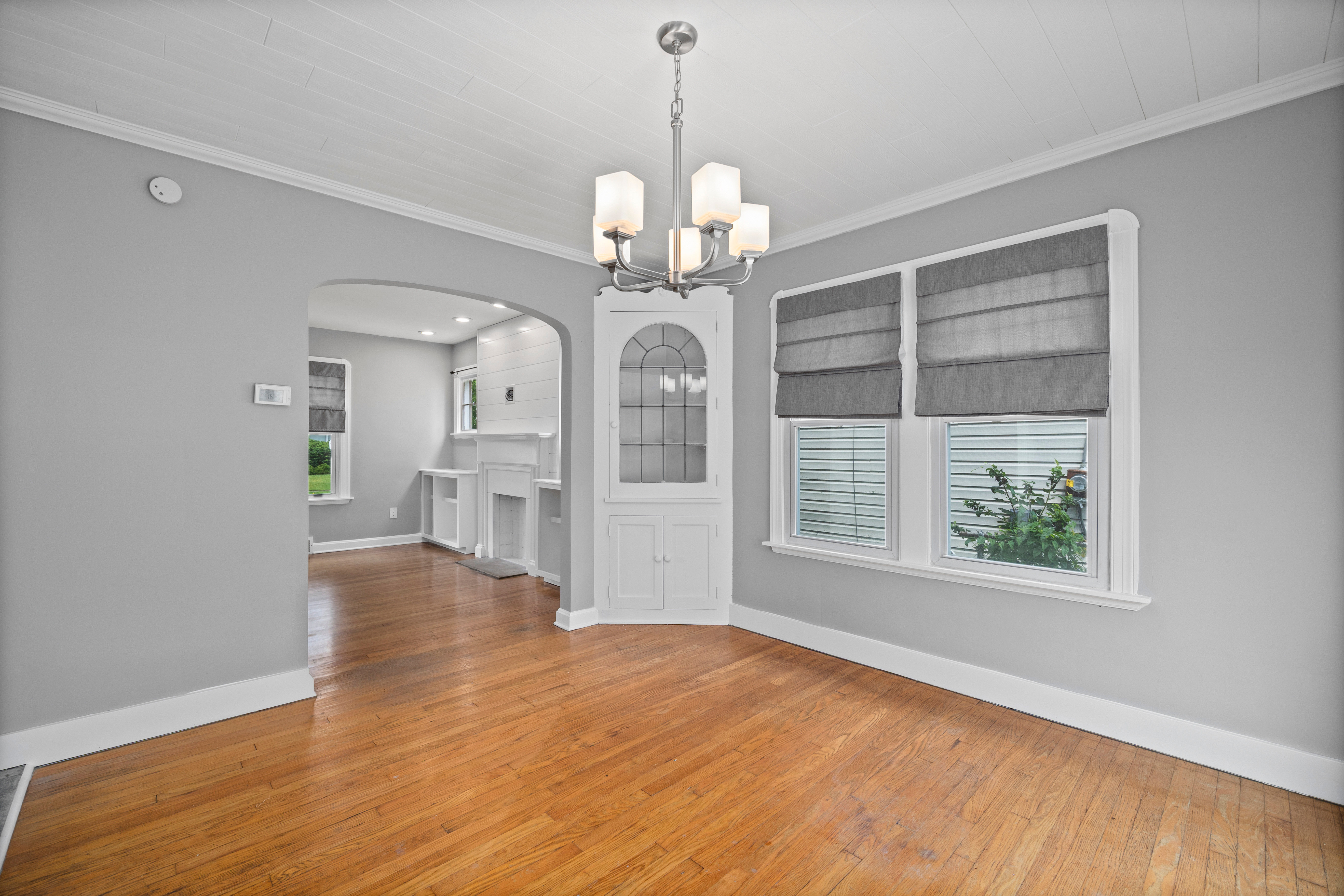
Step inside and the era announces itself immediately. The hardwood floors run through the living room, dining room, and upper-level bedrooms — original 2.25-inch strip oak that has developed a warm patina over seventy-plus years. In the living room, a white shiplap fireplace mantle anchors the space, flanked by built-in shelving. The proportions are classic Colonial: rooms defined by walls and doorways, not open floor plans, each space with its own purpose and character.
What survives
The dining room is where the home's original craftsmanship shows most clearly. A white corner built-in china cabinet — the kind that was standard in 1948 Colonials but is nearly impossible to add without major renovation — sits beneath an arched entryway that connects to the kitchen. Hardwood floors, white trim, and the shiplap ceiling detail in the kitchen transition area all speak to a house that was built with intention. The archways throughout the home have the gentle curve that was characteristic of the era, softening the transitions between rooms in a way that modern construction rarely replicates.
The renovations that knew when to stop
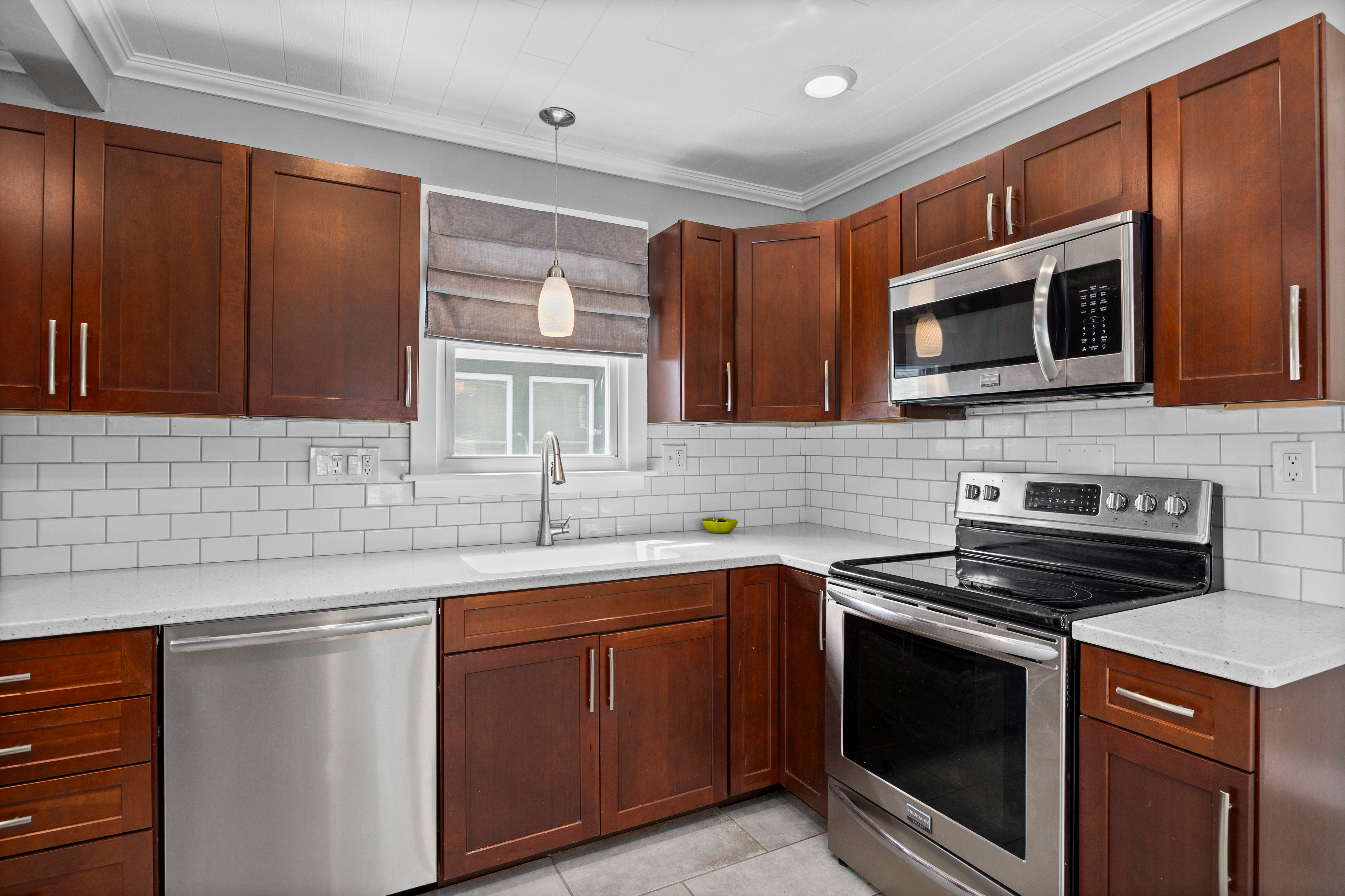
The kitchen has been updated with stained wood shaker cabinets, white quartz countertops, white subway tile backsplash, and stainless steel appliances — a renovation that reads as contemporary without clashing with the home's 1948 bones. The subway tile and quartz are nods to the era's preference for clean, simple materials, while the shaker cabinets echo the built-in cabinetry in the dining room. It's the kind of renovation that respects the house it's inside.
Light, proportion, and the parts a floor plan can't show
Four bedrooms occupy the upper level, each with hardwood floors and natural light from well-placed windows. The full bathroom features a pedestal sink, white beadboard wainscoting, and plank-style tile flooring — details that feel period-appropriate without being museum pieces. Downstairs, the 300-square-foot finished basement adds a recreation room with recessed LED lighting and a sliding blue barn door, bridging the gap between the home's mid-century roots and modern living. The half bath on the lower level adds convenience without requiring a trip upstairs.
Outside, the newer deck overlooks a fenced 0.12-acre yard with a one-car detached garage. The forced air heating and central AC ensure year-round comfort, while the vinyl siding and asphalt roof keep maintenance simple. These are practical updates that let the home's original character remain the focus.
The character that doesn't come back
New construction gives you open floor plans, nine-foot ceilings, and the latest smart-home wiring. What it doesn't give you is the proportions of a 1948 Colonial — rooms sized for living, not for showing. It doesn't give you the patina of seventy-eight years of hardwood underfoot, or the quiet satisfaction of opening a built-in cabinet that was crafted before the word "farmhouse" was a design category. This house doesn't try to be something it isn't. It simply is what it has always been: a Colonial on a tree-lined street in Elyria, Ohio, waiting for the next family to walk through the arched doorway and stay.
— Come see it in person
Photos only go so far.
Schedule a private walk-through and we'll point out the details that don't show up online: the way the floor sings under the dining-room window, the arched doorways that frame each room, the built-in that has been holding china since 1948.